Bloom Energy Corp. Files Definitive Proxy Statement
Ticker: BE · Form: DEF 14A · Filed: Mar 26, 2024 · CIK: 1664703
| Field | Detail |
|---|---|
| Company | Bloom Energy Corp (BE) |
| Form Type | DEF 14A |
| Filed Date | Mar 26, 2024 |
| Risk Level | low |
| Pages | 15 |
| Reading Time | 18 min |
| Key Dollar Amounts | $12 billion, $1 billion |
| Sentiment | neutral |
Sentiment: neutral
Topics: Proxy Statement, DEF 14A, Bloom Energy, Executive Compensation, Corporate Governance
TL;DR
<b>Bloom Energy Corp. has filed its Definitive Proxy Statement for the 2023 fiscal year, detailing executive compensation and corporate governance matters.</b>
AI Summary
Bloom Energy Corp (BE) filed a Proxy Statement (DEF 14A) with the SEC on March 26, 2024. Bloom Energy Corp. filed a Definitive Proxy Statement (DEF 14A) on March 26, 2024. The filing covers the period from January 1, 2023, to December 31, 2023. The company is incorporated in Delaware and its fiscal year ends on December 31. Bloom Energy's principal executive offices are located at 4353 North First Street, San Jose, CA 95134. The filing indicates no fee was required for this filing, or it was previously paid.
Why It Matters
For investors and stakeholders tracking Bloom Energy Corp, this filing contains several important signals. This filing is crucial for shareholders to understand executive compensation structures and potential changes in corporate governance, allowing them to make informed voting decisions. As a DEF 14A, it provides detailed information on matters to be voted on at the annual meeting, including director elections and executive pay, which directly impacts shareholder value and company direction.
Risk Assessment
Risk Level: low — Bloom Energy Corp shows low risk based on this filing. The filing is a routine DEF 14A, which typically contains standard disclosures about executive compensation and corporate governance, posing no immediate new risks.
Analyst Insight
Shareholders should review the executive compensation details and any proposed governance changes to make informed voting decisions at the upcoming meeting.
Key Numbers
- 2024-03-26 — Filing Date (DEF 14A Filing Date)
- 2023-12-31 — Fiscal Year End (Bloom Energy's Fiscal Year End)
- 2023-01-01 — Period of Report Start (Reporting Period Start Date)
- 2023-12-31 — Period of Report End (Reporting Period End Date)
Key Players & Entities
- Bloom Energy Corp. (company) — Registrant
- 4353 North First Street (location) — Business Address
- San Jose (location) — Business Address City
- CA (location) — Business Address State
- 95134 (location) — Business Address Zip
- 408-543-1500 (phone) — Business Phone
FAQ
When did Bloom Energy Corp file this DEF 14A?
Bloom Energy Corp filed this Proxy Statement (DEF 14A) with the SEC on March 26, 2024.
What is a DEF 14A filing?
A DEF 14A is a definitive proxy statement sent to shareholders before annual meetings, covering executive compensation, board nominations, and shareholder votes. This particular DEF 14A was filed by Bloom Energy Corp (BE).
Where can I read the original DEF 14A filing from Bloom Energy Corp?
You can access the original filing directly on the SEC's EDGAR system. The filing is publicly available and includes all exhibits and attachments submitted by Bloom Energy Corp.
What are the key takeaways from Bloom Energy Corp's DEF 14A?
Bloom Energy Corp filed this DEF 14A on March 26, 2024. Key takeaways: Bloom Energy Corp. filed a Definitive Proxy Statement (DEF 14A) on March 26, 2024.. The filing covers the period from January 1, 2023, to December 31, 2023.. The company is incorporated in Delaware and its fiscal year ends on December 31..
Is Bloom Energy Corp a risky investment based on this filing?
Based on this DEF 14A, Bloom Energy Corp presents a relatively low-risk profile. The filing is a routine DEF 14A, which typically contains standard disclosures about executive compensation and corporate governance, posing no immediate new risks.
What should investors do after reading Bloom Energy Corp's DEF 14A?
Shareholders should review the executive compensation details and any proposed governance changes to make informed voting decisions at the upcoming meeting. The overall sentiment from this filing is neutral.
How does Bloom Energy Corp compare to its industry peers?
Bloom Energy operates in the energy sector, focusing on fuel cell technology and hydrogen solutions.
Are there regulatory concerns for Bloom Energy Corp?
The filing is made under the Securities Exchange Act of 1934, specifically Section 14(a), which governs proxy solicitations.
Industry Context
Bloom Energy operates in the energy sector, focusing on fuel cell technology and hydrogen solutions.
Regulatory Implications
The filing is made under the Securities Exchange Act of 1934, specifically Section 14(a), which governs proxy solicitations.
What Investors Should Do
- Review the detailed executive compensation packages outlined in the proxy statement.
- Understand the proposals being put forth for shareholder vote, such as director elections.
- Assess any changes in corporate governance practices and their potential impact.
Key Dates
- 2024-03-26: DEF 14A Filing — Definitive Proxy Statement filed
Year-Over-Year Comparison
This is a DEF 14A filing, which is a standard annual disclosure. Specific comparative data from the previous filing is not detailed in this excerpt.
Filing Stats: 4,506 words · 18 min read · ~15 pages · Grade level 15.3 · Accepted 2024-03-26 16:09:06
Key Financial Figures
- $12 billion — cements, and our orderbook of more than $12 billion in product and service revenue, we are
- $1 billion — e than 20 incidents in the U.S. causing $1 billion or more in damages each in 2023), aging
Filing Documents
- be-20240326.htm (DEF 14A) — 2432KB
- be-20240326_g1.jpg (GRAPHIC) — 39KB
- be-20240326_g10.jpg (GRAPHIC) — 34KB
- be-20240326_g100.jpg (GRAPHIC) — 18KB
- be-20240326_g101.jpg (GRAPHIC) — 32KB
- be-20240326_g102.jpg (GRAPHIC) — 33KB
- be-20240326_g103.jpg (GRAPHIC) — 36KB
- be-20240326_g104.jpg (GRAPHIC) — 35KB
- be-20240326_g105.jpg (GRAPHIC) — 37KB
- be-20240326_g106.jpg (GRAPHIC) — 34KB
- be-20240326_g107.jpg (GRAPHIC) — 39KB
- be-20240326_g108.jpg (GRAPHIC) — 34KB
- be-20240326_g109.jpg (GRAPHIC) — 33KB
- be-20240326_g11.jpg (GRAPHIC) — 41KB
- be-20240326_g110.jpg (GRAPHIC) — 35KB
- be-20240326_g111.jpg (GRAPHIC) — 37KB
- be-20240326_g112.jpg (GRAPHIC) — 111KB
- be-20240326_g113.jpg (GRAPHIC) — 110KB
- be-20240326_g114.jpg (GRAPHIC) — 13KB
- be-20240326_g115.jpg (GRAPHIC) — 274KB
- be-20240326_g116.jpg (GRAPHIC) — 239KB
- be-20240326_g117.jpg (GRAPHIC) — 249KB
- be-20240326_g118.jpg (GRAPHIC) — 5KB
- be-20240326_g119.jpg (GRAPHIC) — 609KB
- be-20240326_g12.jpg (GRAPHIC) — 31KB
- be-20240326_g120.jpg (GRAPHIC) — 779KB
- be-20240326_g121.jpg (GRAPHIC) — 929KB
- be-20240326_g13.jpg (GRAPHIC) — 3KB
- be-20240326_g14.jpg (GRAPHIC) — 21KB
- be-20240326_g15.jpg (GRAPHIC) — 40KB
- be-20240326_g16.jpg (GRAPHIC) — 21KB
- be-20240326_g17.jpg (GRAPHIC) — 26KB
- be-20240326_g18.jpg (GRAPHIC) — 46KB
- be-20240326_g19.jpg (GRAPHIC) — 33KB
- be-20240326_g2.jpg (GRAPHIC) — 2006KB
- be-20240326_g20.jpg (GRAPHIC) — 582KB
- be-20240326_g21.jpg (GRAPHIC) — 38KB
- be-20240326_g22.jpg (GRAPHIC) — 25KB
- be-20240326_g23.jpg (GRAPHIC) — 30KB
- be-20240326_g24.jpg (GRAPHIC) — 31KB
- be-20240326_g25.jpg (GRAPHIC) — 28KB
- be-20240326_g26.jpg (GRAPHIC) — 35KB
- be-20240326_g27.jpg (GRAPHIC) — 52KB
- be-20240326_g28.jpg (GRAPHIC) — 41KB
- be-20240326_g29.jpg (GRAPHIC) — 1095KB
- be-20240326_g3.jpg (GRAPHIC) — 995KB
- be-20240326_g30.jpg (GRAPHIC) — 85KB
- be-20240326_g31.jpg (GRAPHIC) — 89KB
- be-20240326_g32.jpg (GRAPHIC) — 78KB
- be-20240326_g33.jpg (GRAPHIC) — 82KB
- be-20240326_g34.jpg (GRAPHIC) — 87KB
- be-20240326_g35.jpg (GRAPHIC) — 73KB
- be-20240326_g36.jpg (GRAPHIC) — 100KB
- be-20240326_g37.jpg (GRAPHIC) — 104KB
- be-20240326_g38.jpg (GRAPHIC) — 90KB
- be-20240326_g39.jpg (GRAPHIC) — 88KB
- be-20240326_g4.jpg (GRAPHIC) — 33KB
- be-20240326_g40.jpg (GRAPHIC) — 96KB
- be-20240326_g41.jpg (GRAPHIC) — 83KB
- be-20240326_g42.jpg (GRAPHIC) — 115KB
- be-20240326_g43.jpg (GRAPHIC) — 90KB
- be-20240326_g44.jpg (GRAPHIC) — 76KB
- be-20240326_g45.jpg (GRAPHIC) — 100KB
- be-20240326_g46.jpg (GRAPHIC) — 89KB
- be-20240326_g47.jpg (GRAPHIC) — 90KB
- be-20240326_g48.jpg (GRAPHIC) — 55KB
- be-20240326_g49.jpg (GRAPHIC) — 88KB
- be-20240326_g5.jpg (GRAPHIC) — 18KB
- be-20240326_g50.jpg (GRAPHIC) — 109KB
- be-20240326_g51.jpg (GRAPHIC) — 97KB
- be-20240326_g52.jpg (GRAPHIC) — 78KB
- be-20240326_g53.jpg (GRAPHIC) — 15KB
- be-20240326_g54.jpg (GRAPHIC) — 19KB
- be-20240326_g55.jpg (GRAPHIC) — 26KB
- be-20240326_g56.jpg (GRAPHIC) — 71KB
- be-20240326_g57.jpg (GRAPHIC) — 27KB
- be-20240326_g58.jpg (GRAPHIC) — 27KB
- be-20240326_g59.jpg (GRAPHIC) — 68KB
- be-20240326_g6.jpg (GRAPHIC) — 3KB
- be-20240326_g60.jpg (GRAPHIC) — 24KB
- be-20240326_g61.jpg (GRAPHIC) — 62KB
- be-20240326_g62.jpg (GRAPHIC) — 30KB
- be-20240326_g63.jpg (GRAPHIC) — 55KB
- be-20240326_g64.jpg (GRAPHIC) — 25KB
- be-20240326_g65.jpg (GRAPHIC) — 59KB
- be-20240326_g66.jpg (GRAPHIC) — 29KB
- be-20240326_g67.jpg (GRAPHIC) — 62KB
- be-20240326_g68.jpg (GRAPHIC) — 26KB
- be-20240326_g69.jpg (GRAPHIC) — 58KB
- be-20240326_g7.jpg (GRAPHIC) — 30KB
- be-20240326_g70.jpg (GRAPHIC) — 24KB
- be-20240326_g71.jpg (GRAPHIC) — 28KB
- be-20240326_g72.jpg (GRAPHIC) — 25KB
- be-20240326_g73.jpg (GRAPHIC) — 26KB
- be-20240326_g74.jpg (GRAPHIC) — 56KB
- be-20240326_g75.jpg (GRAPHIC) — 29KB
- be-20240326_g76.jpg (GRAPHIC) — 29KB
- be-20240326_g77.jpg (GRAPHIC) — 52KB
- be-20240326_g78.jpg (GRAPHIC) — 29KB
- be-20240326_g79.jpg (GRAPHIC) — 18KB
- be-20240326_g8.jpg (GRAPHIC) — 26KB
- be-20240326_g80.jpg (GRAPHIC) — 79KB
- be-20240326_g81.jpg (GRAPHIC) — 36KB
- be-20240326_g82.jpg (GRAPHIC) — 119KB
- be-20240326_g83.jpg (GRAPHIC) — 34KB
- be-20240326_g84.jpg (GRAPHIC) — 131KB
- be-20240326_g85.jpg (GRAPHIC) — 41KB
- be-20240326_g86.jpg (GRAPHIC) — 87KB
- be-20240326_g87.jpg (GRAPHIC) — 32KB
- be-20240326_g88.jpg (GRAPHIC) — 108KB
- be-20240326_g89.jpg (GRAPHIC) — 27KB
- be-20240326_g9.jpg (GRAPHIC) — 35KB
- be-20240326_g90.jpg (GRAPHIC) — 133KB
- be-20240326_g91.jpg (GRAPHIC) — 34KB
- be-20240326_g92.jpg (GRAPHIC) — 78KB
- be-20240326_g93.jpg (GRAPHIC) — 89KB
- be-20240326_g94.jpg (GRAPHIC) — 18KB
- be-20240326_g95.jpg (GRAPHIC) — 41KB
- be-20240326_g96.jpg (GRAPHIC) — 25KB
- be-20240326_g97.jpg (GRAPHIC) — 25KB
- be-20240326_g98.jpg (GRAPHIC) — 27KB
- be-20240326_g99.jpg (GRAPHIC) — 25KB
- 0001628280-24-013081.txt ( ) — 35549KB
- be-20240326.xsd (EX-101.SCH) — 4KB
- be-20240326_def.xml (EX-101.DEF) — 5KB
- be-20240326_lab.xml (EX-101.LAB) — 7KB
- be-20240326_pre.xml (EX-101.PRE) — 4KB
- be-20240326_htm.xml (XML) — 68KB






























































































Executive Compensation
Executive Compensation Audit Matters
Security Ownership and Stockholder Matters
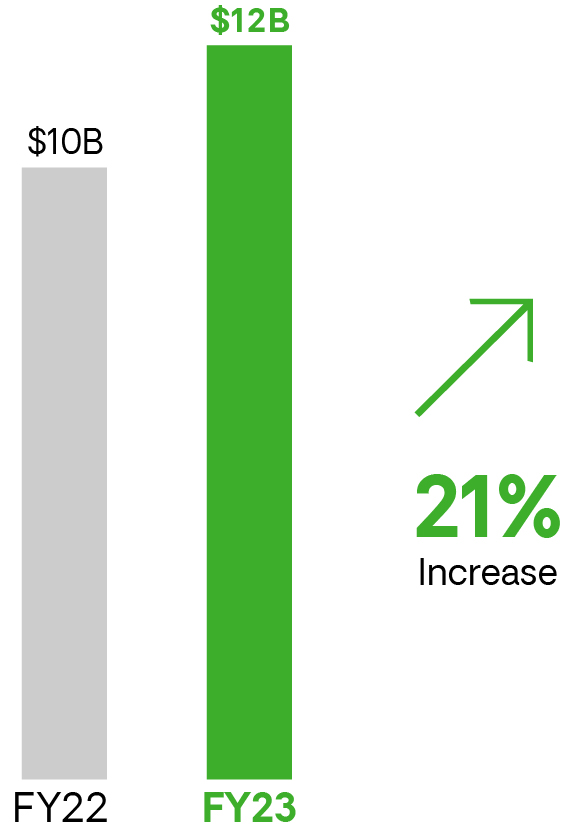
Security Ownership and Stockholder Matters Stockholder Proposals and Nominations User Guide Other Matters during the past four decades. The nationwide forecast for electricity demand shot up from 2.6% to 4.7% growth over the next five years, with grid planners now forecasting a peak demand growth of 38 gigawatts ("GW") in the next four years alone, requiring rapid planning and construction of new generation and transmission. In California, the lack of generating capacity regularly leads to emergency declarations and requests for residents and businesses to reduce their load and even export power from onsite resources, including the growing fleet of dirty diesel generators. To serve California's surging energy demand with solar and wind alone, the required amount of storage, transmission, and capacity additions are projected to drive wholesale electricity rates up an additional 65%. In Asia, there are projections that total energy consumption will double from 2020 to 2050, driven by increasing populations and fast-growing economies. As utilities are increasingly unable to meet the surging demand for power, customers will need distributed solutions, independent of the grid, to ensure their power needs can be met with reliability, efficiency, and affordability. In addition to rapid demand growth, the grid is now facing resiliency challenges as well as shortages of power generation and transmission infrastructure. Threats to grid resiliency include extreme weather events (with more than 20 incidents in the U.S. causing $1 billion or more in damages each in 2023), aging transmission and distribution systems, a wave of retiring generation assets (from both fossil and nuclear fuel sources), and unprecedented load growth that is far outpacing the installation of new renewable resources. In the last 10 years, all new renewable power capacity installed in the U.S. produced less electrical energy than the deficit created by retired coal and nuclear power plants. On the t
Executive Compensation
Executive Compensation Audit Matters
Security Ownership and Stockholder Matters
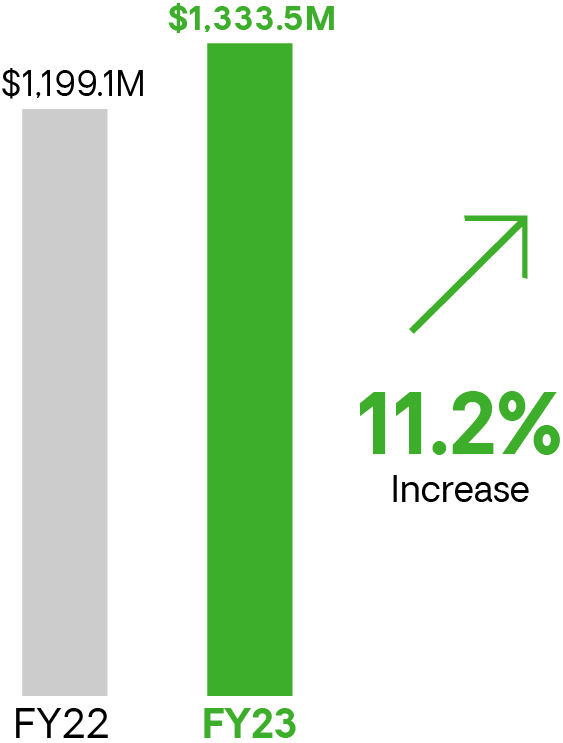
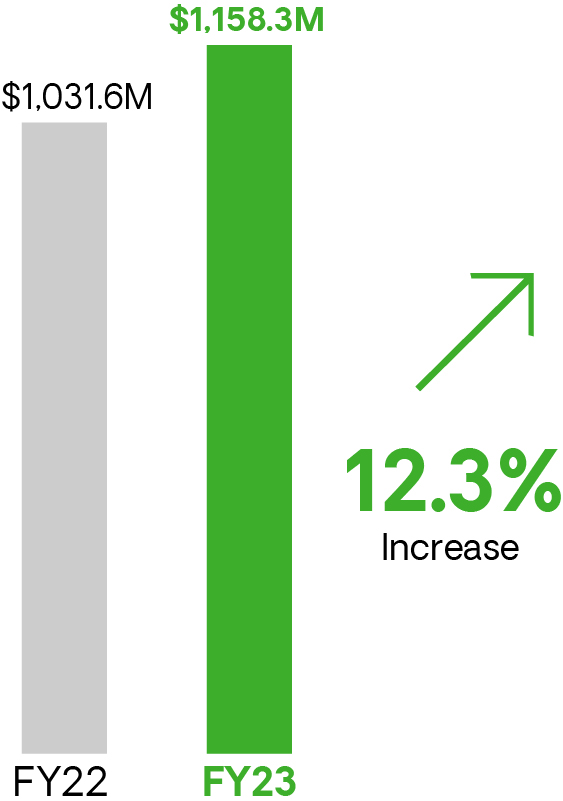
Security Ownership and Stockholder Matters Stockholder Proposals and Nominations User Guide Other Matters Dear Stockholder, On behalf of the Board of Directors, I am pleased to invite you to the 2024 Annual Meeting of Stockholders. As your lead independent director and having spent almost 40 years investing in energy innovation, it is a privilege to work closely with KR Sridhar, our Chairman and CEO, my fellow Board members, and our senior management team as the Company continues to innovate and advance its solid oxide fuel cell platform to provide solutions to address the energy transition to a decarbonized world. Our Company had a successful year in 2023. We achieved record revenue, increased our margins, and expanded our core Energy Server product with two new offerings – CHP, our baseload solution with heat capture, and Be Flexible, our baseload solution with load following. We also strengthened our balance sheet, invested in our people, and enhanced our governance practices. During the past year, we worked with the Company's leadership team to complete the sunsetting of the Company's dual-class shares, giving an equal voice to all stockholders. We also oversaw the restructuring plan intended to scale the business, support the Company's strategic priorities, and drive multi-year growth. I am very proud of the Company's commitment to sound governance practices and the highly-qualified Directors who bring their strong and unique set of skills, perspectives, and experiences as they conduct the Board's governance and oversight responsibilities. Our Board is comprised of an experienced and diverse group of individuals with qualifications spanning executive leadership, global operations, finance, human capital management, emerging technologies, public policy, strategic business development, sustainability, and the energy industry. I encourage you to review Proposal 1 beginning on page 16 for our Director profiles. As the world transitions to a net-zero carb
Security Ownership
Security Ownership 92
Executive Compensation
Executive Compensation 54 Compensation Committee Report 70 PROPOSAL 2 Advisory Approval of Named Executive Officer Compensation 85 Audit Matters 86 PROPOSAL 3 Ratification of Appointment of Independent Registered Public Accounting Firm 86 PROPOSAL 4 Approval of an Amendment to our Restated Certificate of Incorporation to Add Officer Exculpation Provisions and Remove Outdated References to Class B Common Stock 89
Security Ownership and Related Stockholder Matters
Security Ownership and Related Stockholder Matters 92 Stockholder Proposals and Nominations 96 User Guide 97 Other Matters 101 Appendix A – Unaudited Reconciliations from GAAP to Non-GAAP A- 1 Appendix B – Proposed Amendment to Bloom Energy's Restated Certificate of Incorporation B- 1 Certain statements in this Proxy Statement, other than statements of historical fact, including estimates, projections, statements relating to our business plans, objectives and expected operating results, statements regarding our environmental and other sustainability plans and goals, and the assumptions upon which those statements are based, are "forward-looking statements" within the meaning of the Private Securities Litigation Reform Act of 1995, Section 27A of the Securities Act of 1933, as amended, and Section 21E of the Securities Exchange Act of 1934, as amended (the "Exchange Act"). In some cases, forward-looking statements may be identified by terms such as "believe," "project," "expect," "anticipate," "estimate," "intend," "strategy," "future," "opportunity," "plan," "may," "should," "will," "would," "will be," "will continue," "will likely result," and similar expressions. Forward-looking statements are based on current expectations and assumptions that are subject to risks, uncertainties, and other factors, including those identified in our Annual Report on Form 10-K for the year ended December 31, 2023, filed with the U.S. Securities and Exchange Commission ("SEC") and other subsequent documents we file with the SEC, which may cause actual results and outcomes to differ materially from the forward-looking statements. We undertake no obligation to update or revise publicly any forward-looking statements, whether as a result of new information, future events, or otherwise. Any standards of measurement and performance made in reference to our environmental and other sustainability plans and goals are developing and based on assumptions that continue to evol
Executive Compensation
Executive Compensation Audit Matters
Security Ownership and Stockholder Matters
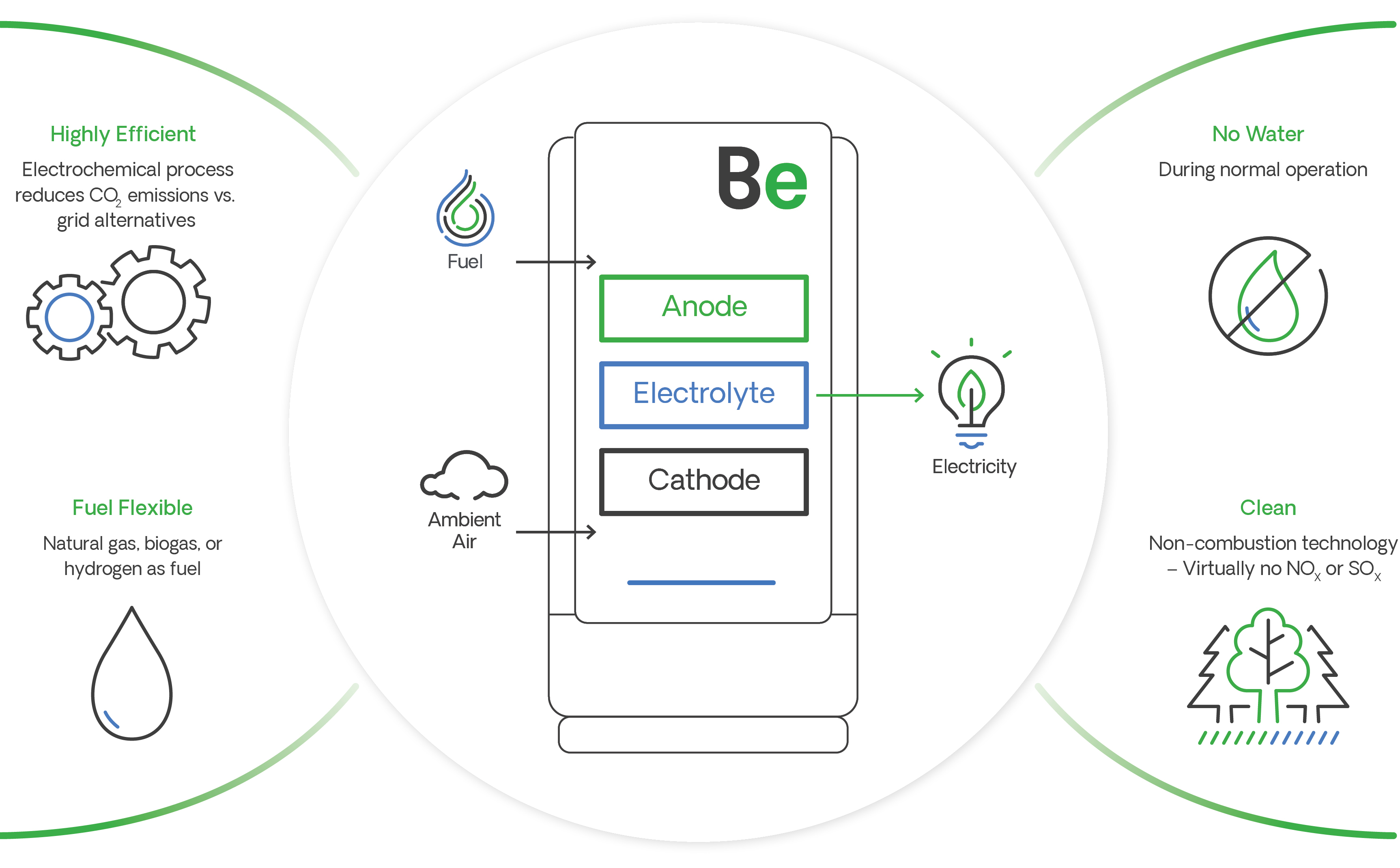
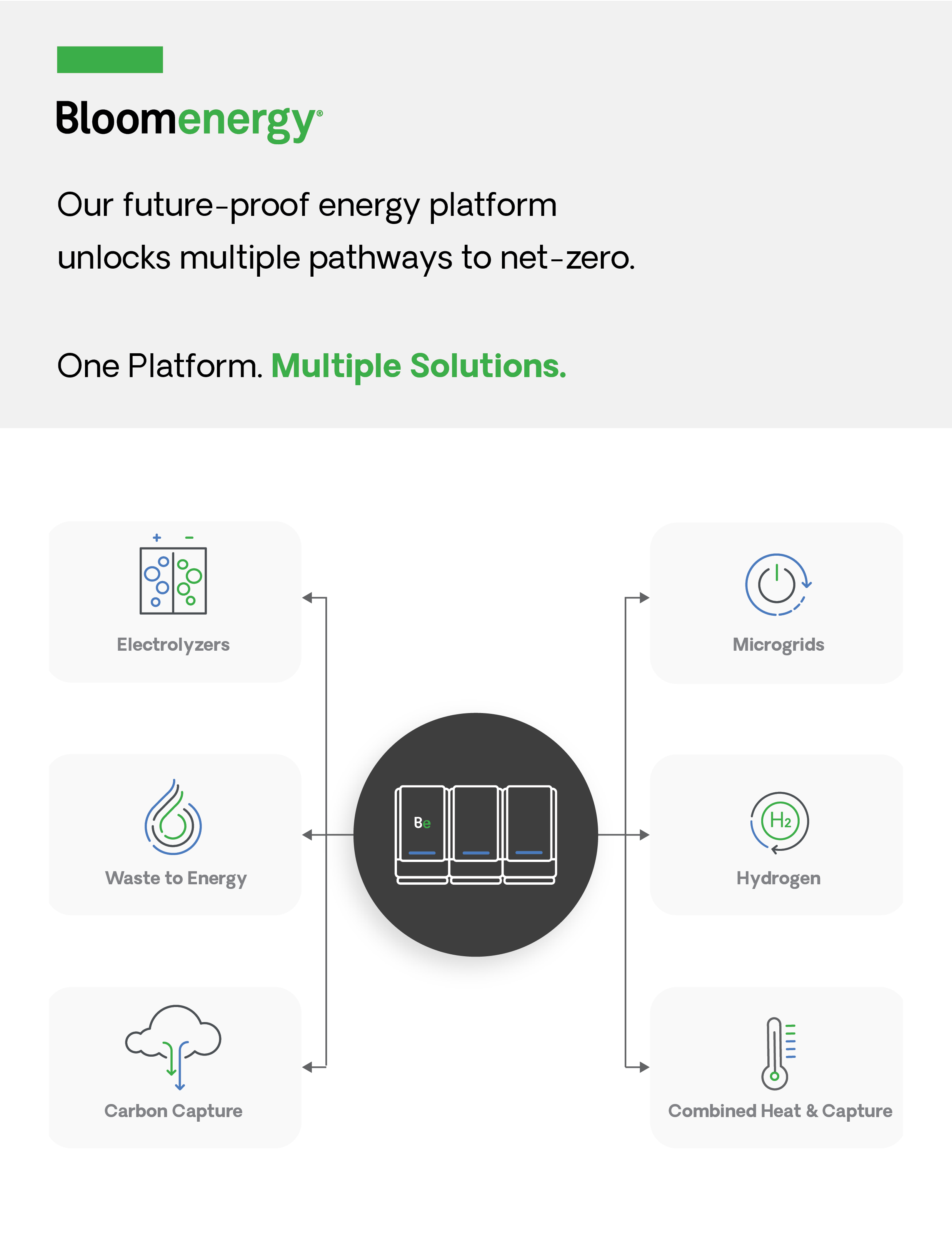
Security Ownership and Stockholder Matters Stockholder Proposals and Nominations User Guide Other Matters A Resilient, Energy Conversion Platform Designed for a Net-Zero Future Our modular, scalable, and configurable solid oxide platform is capable of providing a variety of sustainable power solutions: from the generation of zero-carbon electricity to the production of clean hydrogen. We continue to evolve and expand our offerings as we pursue our mission to make clean, reliable energy affordable for all. Microgrids Bloom's Microgrid and Advanced Bloom Microgrid offerings have grown to become an important solution to an increasingly unreliable centralized power grid. Our microgrids do not depend on transmission lines or the larger distribution system, eliminating the risk of being cut off from power due to natural disasters and have proven resilient during hurricanes, earthquakes, fires, and more. These microgrids can be installed alongside batteries and solar panels to increase flexibility and reliability. Globally, more than 170 Bloom microgrids maintain power supply for hospitals, supermarkets, data centers, high-tech manufacturers, university campuses, and more. Waste to Energy The solid oxide fuel cells in the Energy Server provide an electrochemical pathway to convert methane in natural gas or biogas directly into electricity without combustion. We have pioneered the cleanup of biogas as fuel on-site for our Energy Server operation, without the need for pipeline-quality biomethane. On-site biogas use avoids the release, combustion, or flaring of harmful methane. When the Energy Server uses treated biogas as a fuel, it has a similar emission profile as natural gas but a lower, and potentially even negative, lifecycle carbon intensity. Carbon Capture Utilization & Storage ("CCUS") When operating on hydro-carbon fuel like natural gas, the non-combustion nature of Bloom's Energy Server product generates a relatively pure stream of CO 2 de