Hour Loop, Inc. Files 2023 Annual Report on Form 10-K
Ticker: HOUR · Form: 10-K · Filed: Mar 26, 2024 · CIK: 1874875
Sentiment: neutral
Topics: 10-K, Annual Report, Hour Loop, Financials, Credit Facilities
TL;DR
<b>Hour Loop, Inc. has filed its 2023 10-K report detailing financial performance, capital structure, and credit facilities.</b>
AI Summary
Hour Loop, Inc (HOUR) filed a Annual Report (10-K) with the SEC on March 26, 2024. Hour Loop, Inc. filed its 10-K report for the fiscal year ended December 31, 2023. The company is incorporated in Delaware and operates in the Retail-Catalog & Mail-Order Houses sector. Key financial statement information for common stock, additional paid-in capital, retained earnings, and accumulated other comprehensive income is provided for fiscal years 2021, 2022, and 2023. Details on customer concentration risk related to sales revenue are presented for 2023 and 2022. Information regarding lines of credit with Bank of America and Taishin International Bank is included, with dates and balances for relevant periods.
Why It Matters
For investors and stakeholders tracking Hour Loop, Inc, this filing contains several important signals. This filing provides a comprehensive overview of Hour Loop's financial health and operational structure for the fiscal year 2023, crucial for investors assessing the company's stability and future prospects. The inclusion of credit facility details with Bank of America and Taishin International Bank offers insight into the company's financing strategies and its ability to manage liquidity.
Risk Assessment
Risk Level: — Hour Loop, Inc shows moderate risk based on this filing. The filing is a standard 10-K annual report, which typically contains routine financial and operational disclosures without immediate red flags for risk.
Analyst Insight
Investors should review the detailed financial statements and risk factors within the 10-K to understand Hour Loop's performance and potential challenges.
Key Numbers
- 2023-12-31 — Fiscal Year End (Period covered by the 10-K report)
- 2024-03-26 — Filing Date (Date the 10-K was filed)
- 5961 — SIC Code (Standard Industrial Classification for Retail-Catalog & Mail-Order Houses)
Key Players & Entities
- Hour Loop, Inc. (company) — Filer of the 10-K report
- Bank of America (company) — Lender for a line of credit
- Taishin International Bank (company) — Lender for a line of credit
- DE (jurisdiction) — State of incorporation
- WA (state) — Business and mailing address state
FAQ
When did Hour Loop, Inc file this 10-K?
Hour Loop, Inc filed this Annual Report (10-K) with the SEC on March 26, 2024.
What is a 10-K filing?
A 10-K is a comprehensive annual financial report required by the SEC, covering audited financials, business operations, risk factors, and management discussion. This particular 10-K was filed by Hour Loop, Inc (HOUR).
Where can I read the original 10-K filing from Hour Loop, Inc?
You can access the original filing directly on the SEC's EDGAR system. The filing is publicly available and includes all exhibits and attachments submitted by Hour Loop, Inc.
What are the key takeaways from Hour Loop, Inc's 10-K?
Hour Loop, Inc filed this 10-K on March 26, 2024. Key takeaways: Hour Loop, Inc. filed its 10-K report for the fiscal year ended December 31, 2023.. The company is incorporated in Delaware and operates in the Retail-Catalog & Mail-Order Houses sector.. Key financial statement information for common stock, additional paid-in capital, retained earnings, and accumulated other comprehensive income is provided for fiscal years 2021, 2022, and 2023..
Is Hour Loop, Inc a risky investment based on this filing?
Based on this 10-K, Hour Loop, Inc presents a moderate-risk profile. The filing is a standard 10-K annual report, which typically contains routine financial and operational disclosures without immediate red flags for risk.
What should investors do after reading Hour Loop, Inc's 10-K?
Investors should review the detailed financial statements and risk factors within the 10-K to understand Hour Loop's performance and potential challenges. The overall sentiment from this filing is neutral.
How does Hour Loop, Inc compare to its industry peers?
Hour Loop, Inc. operates within the Retail-Catalog & Mail-Order Houses industry, a sector characterized by direct-to-consumer sales through non-store channels.
Are there regulatory concerns for Hour Loop, Inc?
The filing adheres to SEC regulations, specifically the Securities Exchange Act of 1934, requiring public companies to submit annual reports.
Industry Context
Hour Loop, Inc. operates within the Retail-Catalog & Mail-Order Houses industry, a sector characterized by direct-to-consumer sales through non-store channels.
Regulatory Implications
The filing adheres to SEC regulations, specifically the Securities Exchange Act of 1934, requiring public companies to submit annual reports.
What Investors Should Do
- Analyze the detailed financial statements for revenue trends, profitability, and balance sheet health.
- Review the risk factors section to understand potential challenges and their impact on the company.
- Examine the details of the credit facilities to assess the company's leverage and financing arrangements.
Key Dates
- 2023-12-31: Fiscal Year End — Marks the end of the reporting period for the 10-K.
- 2024-03-26: Filing Date — Date Hour Loop, Inc. submitted its 10-K to the SEC.
Glossary
- 10-K
- An annual report required by the U.S. Securities and Exchange Commission (SEC), which gives a comprehensive summary of a company's financial performance. (This is the primary document Hour Loop, Inc. filed, containing detailed financial and operational information.)
- Fiscal Year End
- The last day of a company's accounting year. (Indicates the period for which the financial results in the 10-K are reported (December 31, 2023).)
Year-Over-Year Comparison
This is the initial filing of the 10-K for the fiscal year 2023, following previous filings which would have covered prior periods.
Filing Stats: 4,549 words · 18 min read · ~15 pages · Grade level 11.3 · Accepted 2024-03-26 16:10:58
Key Financial Figures
- $1.66 — iliates based upon the closing price of $1.66 per share of common stock as of June 30
- $0.0001 — 5,298 shares of common stock, par value $0.0001 per share, of the registrant issued and
- $7.24 — total U.S. retail sales increased 2% to $7.24 trillion in 2023 from $7.09 trillion in
- $7.09 — eased 2% to $7.24 trillion in 2023 from $7.09 trillion in 2022. U.S. ecommerce sales
- $1,118.68 billion — 2. U.S. ecommerce sales increased 7% to $1,118.68 billion in 2023 from $1,039.75 billion in 2022.
- $1,039.75 billion — ed 7% to $1,118.68 billion in 2023 from $1,039.75 billion in 2022. Amazon accounted for nearly
- $0 — From 2013 to 2023, net sales grew from $0 to $132,124,202. Competitive Advantag
- $132,124,202 — 2013 to 2023, net sales grew from $0 to $132,124,202. Competitive Advantage Among more t
- $199.3 billion — 1 when online sales in the U.S. totaled $199.3 billion. A year later, it breached the $200 bil
- $200 billion — billion. A year later, it breached the $200 billion mark for the very first time. From 2011
Filing Documents
- form10-k.htm (10-K) — 1551KB
- ex4-1.htm (EX-4.1) — 38KB
- ex21-1.htm (EX-21.1) — 3KB
- ex23-2.htm (EX-23.2) — 3KB
- ex31-1.htm (EX-31.1) — 11KB
- ex31-2.htm (EX-31.2) — 11KB
- ex32-1.htm (EX-32.1) — 6KB
- ex97-1.htm (EX-97.1) — 58KB
- form10-k_001.jpg (GRAPHIC) — 33KB
- form10-k_002.jpg (GRAPHIC) — 29KB
- ex23-2_001.jpg (GRAPHIC) — 32KB
- 0001493152-24-011298.txt ( ) — 5885KB
- hour-20231231.xsd (EX-101.SCH) — 38KB
- hour-20231231_cal.xml (EX-101.CAL) — 71KB
- hour-20231231_def.xml (EX-101.DEF) — 120KB
- hour-20231231_lab.xml (EX-101.LAB) — 301KB
- hour-20231231_pre.xml (EX-101.PRE) — 238KB
- form10-k_htm.xml (XML) — 635KB

Business
Business 4 Item 1A.
Risk Factors
Risk Factors 14 Item 1B. Unresolved Staff Comments 33 Item 1C. Cybersecurity 33 Item 2.
Properties
Properties 33 Item 3.
Legal Proceedings
Legal Proceedings 33 Item 4. Mine Safety Disclosures 33 Part II Item 5. Market for Registrant's Common Equity, Related Stockholder Matters and Issuer Purchases of Equity Securities 34 Item 6. Reserved 36 Item 7.
Management's Discussion and Analysis of Financial Condition and Results of Operations
Management's Discussion and Analysis of Financial Condition and Results of Operations 36 Item 7A.
Quantitative and Qualitative Disclosures About Market Risk
Quantitative and Qualitative Disclosures About Market Risk 44 Item 8.
Financial Statements and Supplementary Data
Financial Statements and Supplementary Data 44 Item 9. Changes in and Disagreements with Accountants on Accounting and Financial Disclosure 44 Item 9A.
Controls and Procedures
Controls and Procedures 44 Item 9B. Other Information 45 Item 9C. Disclosure Regarding Foreign Jurisdictions that Prevent Inspections 45 Part III Item 10. Directors, Executive Officers and Corporate Governance 46 Item 11.
Executive Compensation
Executive Compensation 51 Item 12.
Security Ownership of Certain Beneficial Owners and Management and Related Stockholder Matters
Security Ownership of Certain Beneficial Owners and Management and Related Stockholder Matters 62 Item 13. Certain Relationships and Related Transactions, and Director Independence 64 Item 14. Principal Accountant Fees and Services 67 Part IV Item 15. Exhibit and Financial Statement Schedules 68 Item 16. Form 10-K Summary 70
Signatures
Signatures 71 2 CAUTIONARY NOTE REGARDING FORWARD-LOOKING STATEMENTS Some of the statements contained in this annual report may constitute "forward-looking statements" for purposes of the federal securities laws. Our forward-looking statements include, but are not limited to, statements regarding our or our management team's expectations, hopes, beliefs, intentions or strategies regarding the future. In addition, any statements that refer to projections, forecasts or other characterizations of future events or circumstances, including any underlying assumptions, are forward-looking statements. The words "anticipate," "believe," "continue," "could," "estimate," "expect," "intend," "may," "might," "plan," "possible," "potential," "predict," "project," "should," "would" and similar expressions may identify forward-looking statements, but the absence of these words does not mean that a statement is not forward-looking. The forward-looking statements contained in this annual report are based on our current expectations and beliefs concerning future developments and their potential effects on us. There can be no assurance that future developments affecting us will be those that we have anticipated. These forward-looking statements involve a number of risks, uncertainties (some of which are beyond our control) or other assumptions that may cause actual results or performance to be materially different from those expressed or implied by these forward-looking statements. These risks and uncertainties include, but are not limited to, the following risks, uncertainties and other factors: the level of demand for our products and services; competition in our markets; our ability to grow and manage growth profitably; our ability to access additional capital; changes in applicable laws or regulations; our ability to attract and retain qualified personnel; the possibility that we may be adversely affected by other economic, business, and/or competitive factor
Business
Business We are an online retailer engaged in e-commerce retailing in the U.S. market. We have operated as a third-party seller on www.amazon.com since 2013. We have also sold merchandise on our website at www.hourloop.com since 2013. We expanded our operations to other marketplaces such as Walmart, eBay and Etsy in 2020, 2022, and 2023, respectively. To date, we have generated practically all of our revenue as a third-party seller on www.amazon.com and only a negligible amount of revenue from our operations on our website at www.hourloop.com and as a third-party seller on other marketplaces. We manage more than 100,000 stock-keeping units ("SKUs"). Product categories include home/garden dcor, toys, kitchenware, apparels, and electronics. Our primary strategy is to bring most of our vendors product selections to the customers. We have advanced software that assists us in identifying product gaps so we can keep such products in stock year-round including the entirety of the last quarter (holiday season) of the calendar year ("Q4"). In upcoming years, we plan to expand our business by increasing the number of business managers, vendors and SKUs while improving on profitability.
Business
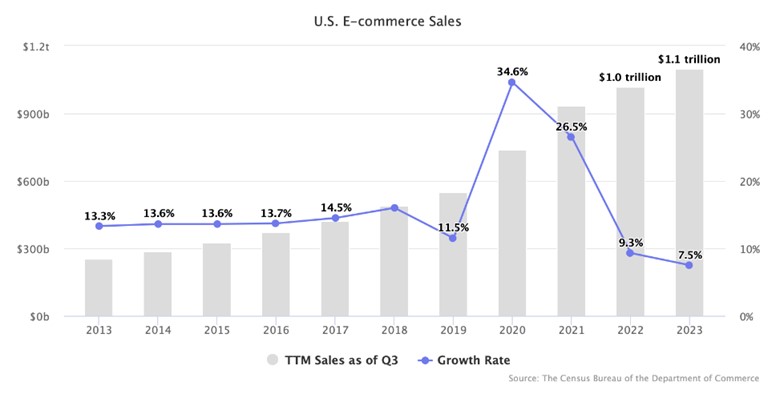
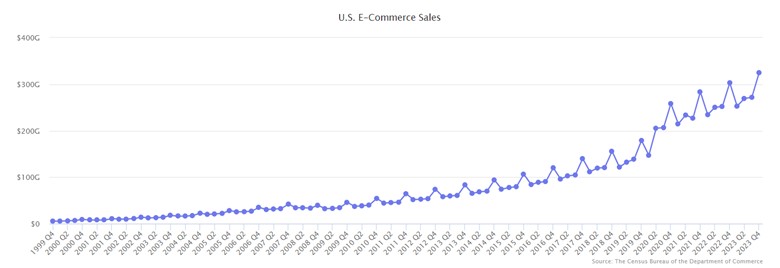
Business Model There are three main types of business models on Amazon: wholesale, private label and retail arbitrage. Our business model is wholesale, also known as reselling, which refers to buying products in bulk directly from the brand or manufacturer at a wholesale price and making a profit by selling the product on Amazon. We sell merchandise on Amazon and the sales are fulfilled by Amazon. We pay Amazon fees for allowing us to sell on their platform. Our relationship with Walmart is also similar. We pay Walmart fees for allowing us to sell our merchandise on their platform. As stated above, to date, we have generated only a negligible amount of revenues as a third-party seller on www.walmart.com . The advantages of selling via a wholesale model: Purchase lower unit quantities with wholesale orders than private label products. Selling wholesale is less time intensive and easier to scale than sourcing products via retail arbitrage. More brands will want to work with us because we can provide broader Amazon presence. The challenges of selling via a wholesale model: Fierce competition on listing for Buy Box on amazon.com (as described below). Developing and maintaining relationships with brand manufacturers. Market Description/Opportunities According to Marketplace Pulse, total U.S. retail sales increased 2% to $7.24 trillion in 2023 from $7.09 trillion in 2022. U.S. ecommerce sales increased 7% to $1,118.68 billion in 2023 from $1,039.75 billion in 2022. Amazon accounted for nearly 37.6% of all e-commerce in the United States and that makes Amazon the biggest ecommerce giant currently in the market. 4 Formation We were originally incorporated under the laws of the State of Washington on January 13, 2015. In 2019, we formed a wholly owned subsidiary, Flywheel Consulting Ltd. ("Flywheel"), to provide business operating consulting services, exclusively to Hour Loop. On April 7, 2021, Hour Loop converted from a Washington corporation to
Business
Business managers, after establishing the bases for prices, begin to develop pricing strategies for each product while taking the current market conditions, company goals (e.g., increasing short-term or long-term profits) and strategies into consideration. Furthermore, business managers consider different marketing segments such as costs and competitions in order to develop effective pricing strategies and policies. The following subsections provide more insight into various pricing strategies we have developed over the years. Our internal training mainly focuses on competition-based pricing policy and value-based pricing policy. 1. Competition-Based Pricing Policy: 20% of our products are toys, which are extremely popular and competitive. In this type of environment where volume is high but gross margin is low, our main strategy is to purchase large quantities, so we can increase sales volume and price competitively while maintaining an average return on investment ("ROI") of at least 15%. We are using the competition-based pricing policy to match competitors' prices, which means constantly winning Buy Box (as described below). Our pricing system is capable of automatically matching all Buy Box. 2. Promotional Pricing Policy: To boost lagging sales, we adapted our own promotional pricing policy, which involves offering modest discounts on products with inventory age over 45 days, which proves to be cost-effective at reducing the number of low turn-over SKUs. 3. Value-Based Pricing Policy: We incorporate a value-based pricing strategy when inventories are constrained, which can happen when customer demand suddenly spikes due to external factors, supply shortage, or seasonal spikes. We set prices to reflect the value perceived by customers, especially on products under gift categories when consumer demands are higher. Contrary to a typical seller, we opt to maintain high gross margin instead of marking down prices and running special deals during the high-