Intel Corp. Files 2023 Annual Report on Form 10-K
Ticker: INTC · Form: 10-K · Filed: Jan 26, 2024 · CIK: 50863
| Field | Detail |
|---|---|
| Company | Intel CORP (INTC) |
| Form Type | 10-K |
| Filed Date | Jan 26, 2024 |
| Risk Level | medium |
| Pages | 14 |
| Reading Time | 17 min |
| Key Dollar Amounts | $0.001, $54.2 b, $8.8 b, $16.0 billion, $25.8 b |
| Sentiment | neutral |
Complexity: moderate
Sentiment: neutral
Topics: Intel, 10-K, Annual Report, Semiconductors, Financials
TL;DR
<b>Intel Corporation has officially submitted its comprehensive 2023 annual report (10-K) detailing its financial performance and operational status.</b>
AI Summary
INTEL CORP (INTC) filed a Annual Report (10-K) with the SEC on January 26, 2024. Intel Corporation filed its 10-K report for the fiscal year ending December 30, 2023. The filing covers the period from January 1, 2023, to December 30, 2023. The company's principal executive offices are located at 2200 Mission College Blvd, Santa Clara, CA 95054. Intel's IRS number is 941672743, and it is incorporated in Delaware. The filing was made on January 26, 2024.
Why It Matters
For investors and stakeholders tracking INTEL CORP, this filing contains several important signals. This 10-K filing provides the most up-to-date, official financial and operational overview of Intel Corp. for the fiscal year 2023, crucial for investors and analysts assessing the company's performance and future prospects. As a key player in the semiconductor industry, Intel's annual report offers insights into the broader market trends, competitive landscape, and technological advancements impacting the sector.
Risk Assessment
Risk Level: medium — INTEL CORP shows moderate risk based on this filing. The filing is a standard 10-K, which is a routine disclosure for public companies. However, the semiconductor industry is subject to rapid technological change and intense competition, which presents inherent risks.
Analyst Insight
Investors should review the detailed financial statements and risk factors within the 10-K to understand Intel's performance and strategic positioning in the evolving semiconductor market.
Financial Highlights
- revenue
- 4228
- revenue Growth
- 140.0
Key Numbers
- 20231230 — Fiscal Year End (Conformed Period of Report)
- 20240126 — Filing Date (Filed as of Date)
- 155 — Public Document Count (Conformed Document Count)
- 0000050863-24-000010 — Accession Number (Unique identifier for the filing)
Key Players & Entities
- INTEL CORP (company) — Filer name
- 0000050863 (company) — Central Index Key
- 3674 (company) — Standard Industrial Classification (Semiconductors & Related Devices)
- DE (company) — State of Incorporation
- 2200 MISSION COLLEGE BLVD (company) — Business and Mail Address Street 1
- SANTA CLARA (company) — Business and Mail Address City
- CA (company) — Business and Mail Address State
- 95054 (company) — Business and Mail Address Zip
FAQ
When did INTEL CORP file this 10-K?
INTEL CORP filed this Annual Report (10-K) with the SEC on January 26, 2024.
What is a 10-K filing?
A 10-K is a comprehensive annual financial report required by the SEC, covering audited financials, business operations, risk factors, and management discussion. This particular 10-K was filed by INTEL CORP (INTC).
Where can I read the original 10-K filing from INTEL CORP?
You can access the original filing directly on the SEC's EDGAR system. The filing is publicly available and includes all exhibits and attachments submitted by INTEL CORP.
What are the key takeaways from INTEL CORP's 10-K?
INTEL CORP filed this 10-K on January 26, 2024. Key takeaways: Intel Corporation filed its 10-K report for the fiscal year ending December 30, 2023.. The filing covers the period from January 1, 2023, to December 30, 2023.. The company's principal executive offices are located at 2200 Mission College Blvd, Santa Clara, CA 95054..
Is INTEL CORP a risky investment based on this filing?
Based on this 10-K, INTEL CORP presents a moderate-risk profile. The filing is a standard 10-K, which is a routine disclosure for public companies. However, the semiconductor industry is subject to rapid technological change and intense competition, which presents inherent risks.
What should investors do after reading INTEL CORP's 10-K?
Investors should review the detailed financial statements and risk factors within the 10-K to understand Intel's performance and strategic positioning in the evolving semiconductor market. The overall sentiment from this filing is neutral.
How does INTEL CORP compare to its industry peers?
Intel operates in the semiconductor industry, a sector characterized by rapid innovation, significant capital investment, and intense global competition.
Are there regulatory concerns for INTEL CORP?
As a publicly traded company, Intel is subject to the regulations of the U.S. Securities and Exchange Commission (SEC), requiring regular filings like the 10-K.
Industry Context
Intel operates in the semiconductor industry, a sector characterized by rapid innovation, significant capital investment, and intense global competition.
Regulatory Implications
As a publicly traded company, Intel is subject to the regulations of the U.S. Securities and Exchange Commission (SEC), requiring regular filings like the 10-K.
What Investors Should Do
- Review Intel's detailed financial statements for the fiscal year 2023.
- Analyze the risk factors section to understand potential challenges and uncertainties.
- Compare Intel's performance metrics against industry benchmarks and competitors.
Key Dates
- 2023-12-30: Fiscal Year End — End of the reporting period for the 10-K.
- 2024-01-26: Filing Date — Date the 10-K was officially filed with the SEC.
Year-Over-Year Comparison
This is the initial filing for the fiscal year 2023. A comparison to the previous year's filing (2022) would require accessing that specific document.
Filing Stats: 4,346 words · 17 min read · ~14 pages · Grade level 16.9 · Accepted 2024-01-25 18:38:16
Key Financial Figures
- $0.001 — ange on which registered Common stock, $0.001 par value INTC Nasdaq Global Select Mar
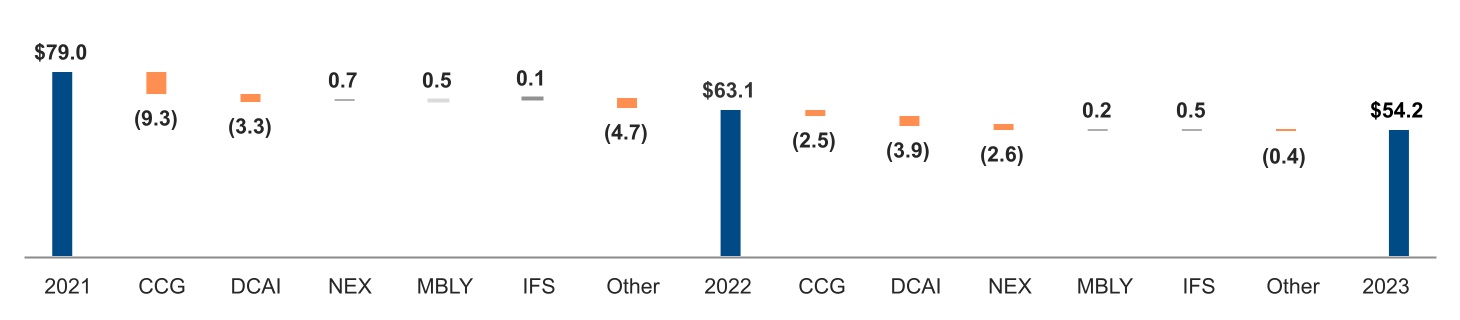
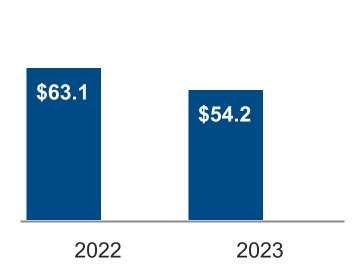
- $54.2 b — s A Year in Review 2023 revenue was $54.2 billion, down $8.8 billion, or 14%, from
- $8.8 b — 2023 revenue was $54.2 billion, down $8.8 billion, or 14%, from 2022. CCG revenue d
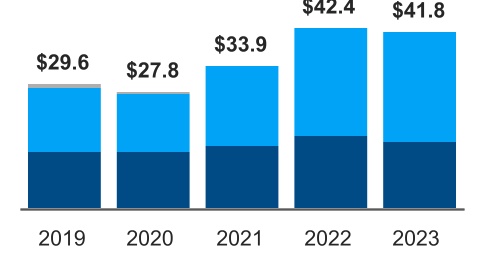
- $16.0 billion — nment across product lines. We invested $16.0 billion in R&D, made capital investments of $25
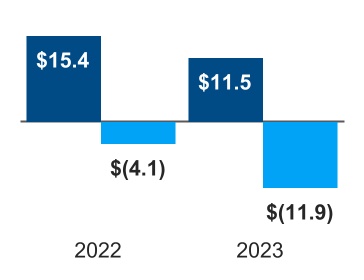
- $25.8 b — ion in R&D, made capital investments of $25.8 billion, and had $11.5 billion in cash fr
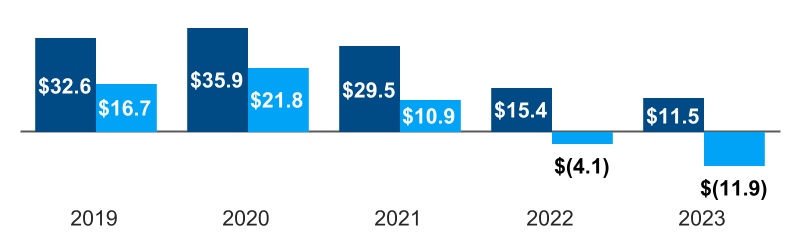
- $11.5 billion — l investments of $25.8 billion, and had $11.5 billion in cash from operations and $(11.9) bil
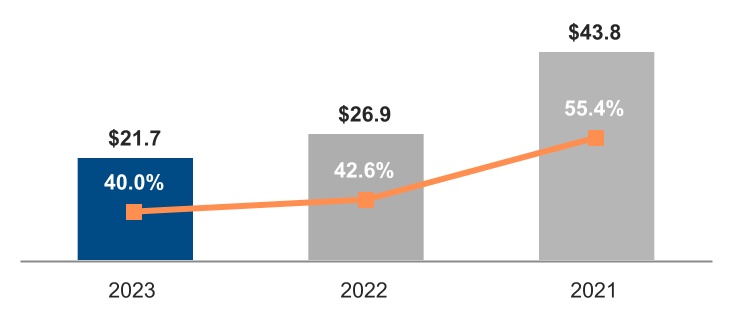
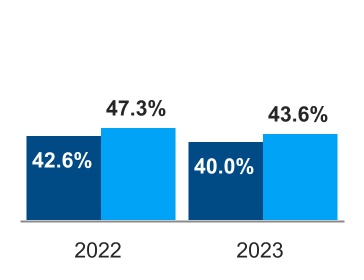
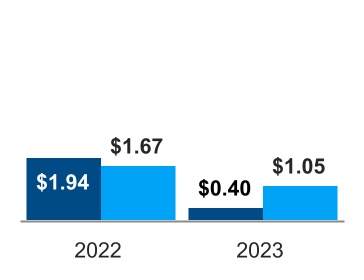
- $54.2B — Flow $B Adjusted Free Cash Flow 1 $B $54.2B 40.0% 43.6% $0.40 $1.05 $11.5B $(11.9)B
- $0.40 — ree Cash Flow 1 $B $54.2B 40.0% 43.6% $0.40 $1.05 $11.5B $(11.9)B GAAP GAAP non-G
- $1.05 — sh Flow 1 $B $54.2B 40.0% 43.6% $0.40 $1.05 $11.5B $(11.9)B GAAP GAAP non-GAAP 1
- $11.5B — w 1 $B $54.2B 40.0% 43.6% $0.40 $1.05 $11.5B $(11.9)B GAAP GAAP non-GAAP 1 GAAP n
- $1.54 — own 3.7 ppts from 2022 Diluted EPS down $1.54 or 79% from 2022 Diluted EPS down $0.62
- $0.62 — $1.54 or 79% from 2022 Diluted EPS down $0.62 or 37% from 2022 Operating cash flow do
- $4.0B — 37% from 2022 Operating cash flow down $4.0B or 26% from 2022 Adjusted free cash fl
- $7.8B — from 2022 Adjusted free cash flow down $7.8B or 191% from 2022 Lower revenue in CC
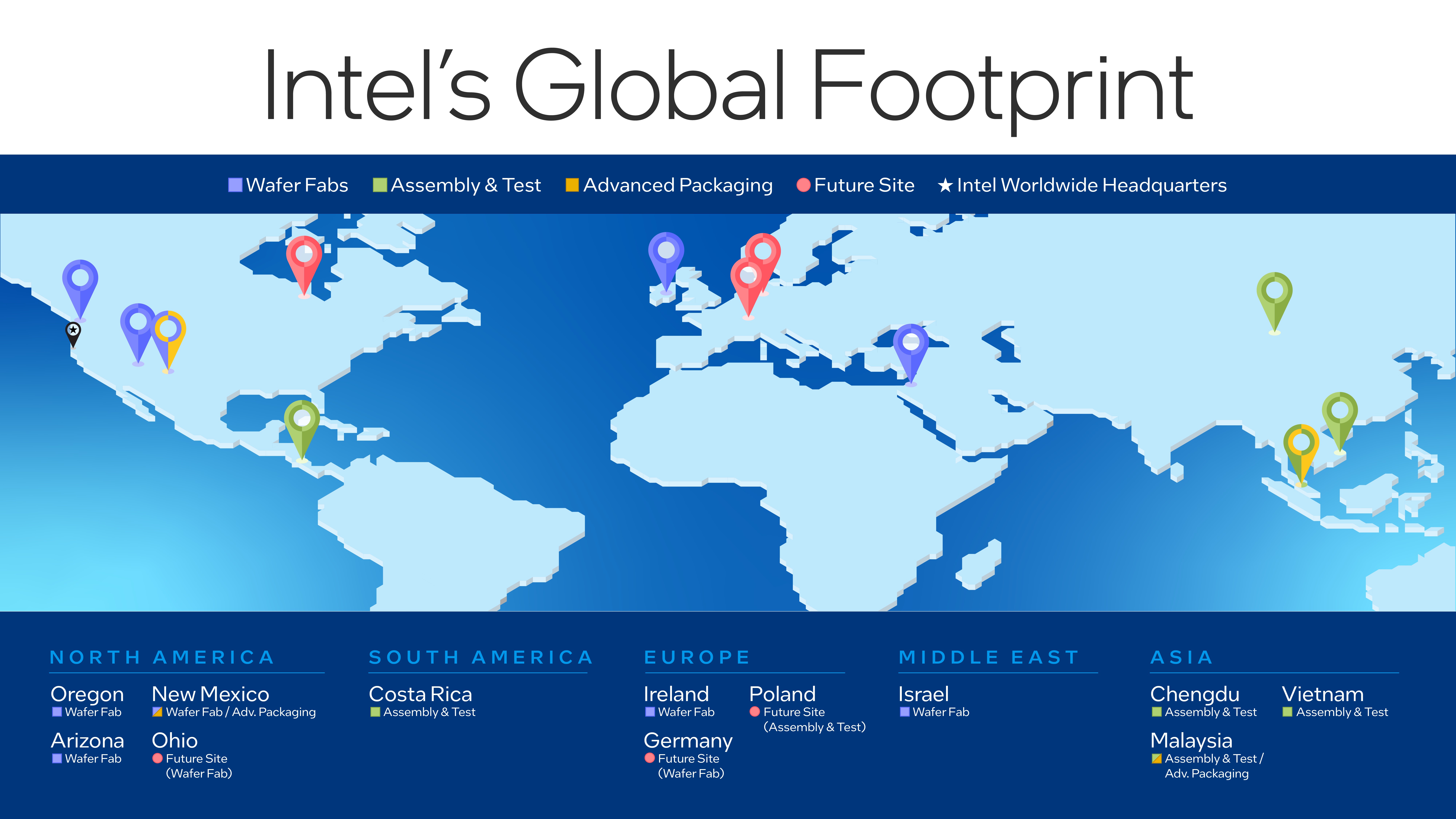
- $100 billion — and Oregon, estimated to represent over $100 billion of US manufacturing and research invest
Filing Documents
- intc-20231230.htm (10-K) — 3199KB
- a12302023-ex1016.htm (EX-10.16) — 21KB
- a12302023-ex211.htm (EX-21.1) — 20KB
- a12302023-ex231.htm (EX-23.1) — 5KB
- a12302023-ex311.htm (EX-31.1) — 11KB
- a12302023-ex312.htm (EX-31.2) — 11KB
- a12302023-ex321.htm (EX-32.1) — 8KB
- a12302023-ex971.htm (EX-97.1) — 27KB
- a12302023-ex991.htm (EX-99.1) — 7KB
- image.jpg (GRAPHIC) — 12KB
- intc-20231230_g1.jpg (GRAPHIC) — 24KB
- intc-20231230_g10.jpg (GRAPHIC) — 78KB
- intc-20231230_g11.jpg (GRAPHIC) — 92KB
- intc-20231230_g12.jpg (GRAPHIC) — 73KB
- intc-20231230_g13.jpg (GRAPHIC) — 79KB
- intc-20231230_g14.jpg (GRAPHIC) — 74KB
- intc-20231230_g15.jpg (GRAPHIC) — 107KB
- intc-20231230_g16.jpg (GRAPHIC) — 66KB
- intc-20231230_g17.jpg (GRAPHIC) — 30KB
- intc-20231230_g18.jpg (GRAPHIC) — 22KB
- intc-20231230_g19.jpg (GRAPHIC) — 25KB
- intc-20231230_g2.jpg (GRAPHIC) — 584KB
- intc-20231230_g20.jpg (GRAPHIC) — 75KB
- intc-20231230_g21.jpg (GRAPHIC) — 67KB
- intc-20231230_g22.jpg (GRAPHIC) — 1625KB
- intc-20231230_g23.jpg (GRAPHIC) — 66KB
- intc-20231230_g24.jpg (GRAPHIC) — 408KB
- intc-20231230_g25.jpg (GRAPHIC) — 64KB
- intc-20231230_g26.jpg (GRAPHIC) — 85KB
- intc-20231230_g27.jpg (GRAPHIC) — 562KB
- intc-20231230_g28.jpg (GRAPHIC) — 1868KB
- intc-20231230_g29.jpg (GRAPHIC) — 26KB
- intc-20231230_g3.jpg (GRAPHIC) — 210KB
- intc-20231230_g30.jpg (GRAPHIC) — 14KB
- intc-20231230_g31.jpg (GRAPHIC) — 1849KB
- intc-20231230_g32.jpg (GRAPHIC) — 16KB
- intc-20231230_g33.jpg (GRAPHIC) — 15KB
- intc-20231230_g34.jpg (GRAPHIC) — 1766KB
- intc-20231230_g35.jpg (GRAPHIC) — 15KB
- intc-20231230_g36.jpg (GRAPHIC) — 14KB
- intc-20231230_g37.jpg (GRAPHIC) — 1432KB
- intc-20231230_g38.jpg (GRAPHIC) — 14KB
- intc-20231230_g39.jpg (GRAPHIC) — 15KB
- intc-20231230_g4.jpg (GRAPHIC) — 241KB
- intc-20231230_g40.jpg (GRAPHIC) — 2366KB
- intc-20231230_g41.jpg (GRAPHIC) — 14KB
- intc-20231230_g42.jpg (GRAPHIC) — 15KB
- intc-20231230_g43.jpg (GRAPHIC) — 44KB
- intc-20231230_g44.jpg (GRAPHIC) — 23KB
- intc-20231230_g45.jpg (GRAPHIC) — 22KB
- intc-20231230_g46.jpg (GRAPHIC) — 20KB
- intc-20231230_g47.jpg (GRAPHIC) — 105KB
- intc-20231230_g5.jpg (GRAPHIC) — 12KB
- intc-20231230_g6.jpg (GRAPHIC) — 14KB
- intc-20231230_g7.jpg (GRAPHIC) — 13KB
- intc-20231230_g8.jpg (GRAPHIC) — 14KB
- intc-20231230_g9.jpg (GRAPHIC) — 2258KB
- 0000050863-24-000010.txt ( ) — 58776KB
- intc-20231230.xsd (EX-101.SCH) — 85KB
- intc-20231230_cal.xml (EX-101.CAL) — 150KB
- intc-20231230_def.xml (EX-101.DEF) — 617KB
- intc-20231230_lab.xml (EX-101.LAB) — 1358KB
- intc-20231230_pre.xml (EX-101.PRE) — 869KB
- intc-20231230_htm.xml (XML) — 2700KB

























Management's Discussion and Analysis
Management's Discussion and Analysis Our Products 20 Segment Trends and Results 21 Consolidated Results of Operations 37 Liquidity and Capital Resources 42 Critical Accounting Estimates 44 Non-GAAP Financial Measures 45 Risk Factors and Other Key Information Risk Factors 48 Sales and Marketing 63
Quantitative and Qualitative Disclosures About Market Risk 64
Quantitative and Qualitative Disclosures About Market Risk 64 Cybersecurity 65 Properties 66 Market for Our Common Stock 66 Stock Performance Graph 67 Issuer Purchases of Equity Securities 67 Rule 10b5-1 Trading Arrangements 67 Information About Our Executive Officers 68 Disclosure Pursuant to Section 13(r) of the Securities Exchange Act of 1934 69
Financial Statements and Supplemental Details
Financial Statements and Supplemental Details Auditor's Reports 71 Consolidated Financial Statements 74
Notes to Consolidated Financial Statements
Notes to Consolidated Financial Statements 79 Key Terms 112
Controls and Procedures 115
Controls and Procedures 115 Exhibits 116 Form 10-K Cross-Reference Index 121 Table of Contents
Forward-Looking Statements
Forward-Looking Statements This Form 10-K contains forward-looking statements that involve a number of risks and uncertainties. Words such as "accelerate", "achieve", "aim", "ambitions", "anticipate", "believe", "committed", "continue", "could", "designed", "estimate", "expect", "forecast", "future", "goals", "grow", "guidance", "intend", "likely", "may", "might", "milestones", "next generation", "objective", "on track", "opportunity", "outlook", "pending", "plan", "position", "possible", "potential", "predict", "progress", "ramp", "roadmap", "seek", "should", "strive", "targets", "to be", "upcoming", "will", "would", and variations of such words and similar expressions are intended to identify such forward-looking statements, which may include statements regarding: our business plans and strategy and anticipated benefits therefrom, including with respect to our IDM 2.0 strategy, our Smart Capital strategy, our partnership with Brookfield, the transition to an internal foundry model, updates to our reporting structure, and our AI strategy; projections of our future financial performance, including future revenue, gross margins, capital expenditures, and cash flows; projected costs and yield trends; future cash requirements, the availability, uses, sufficiency, and cost of capital resources, and sources of funding, including for future capital and R&D investments and for returns to stockholders, such as stock repurchases and dividends, and credit ratings expectations; future products, services, and technologies, and the expected goals, timeline, ramps, progress, availability, production, regulation, and benefits of such products, services, and technologies, including future process nodes and packaging technology, product roadmaps, schedules, future product architectures, expectations regarding process performance, per-watt parity, and metrics, and expectations regarding product and process leadership; investment plans and impacts of investment plans, including